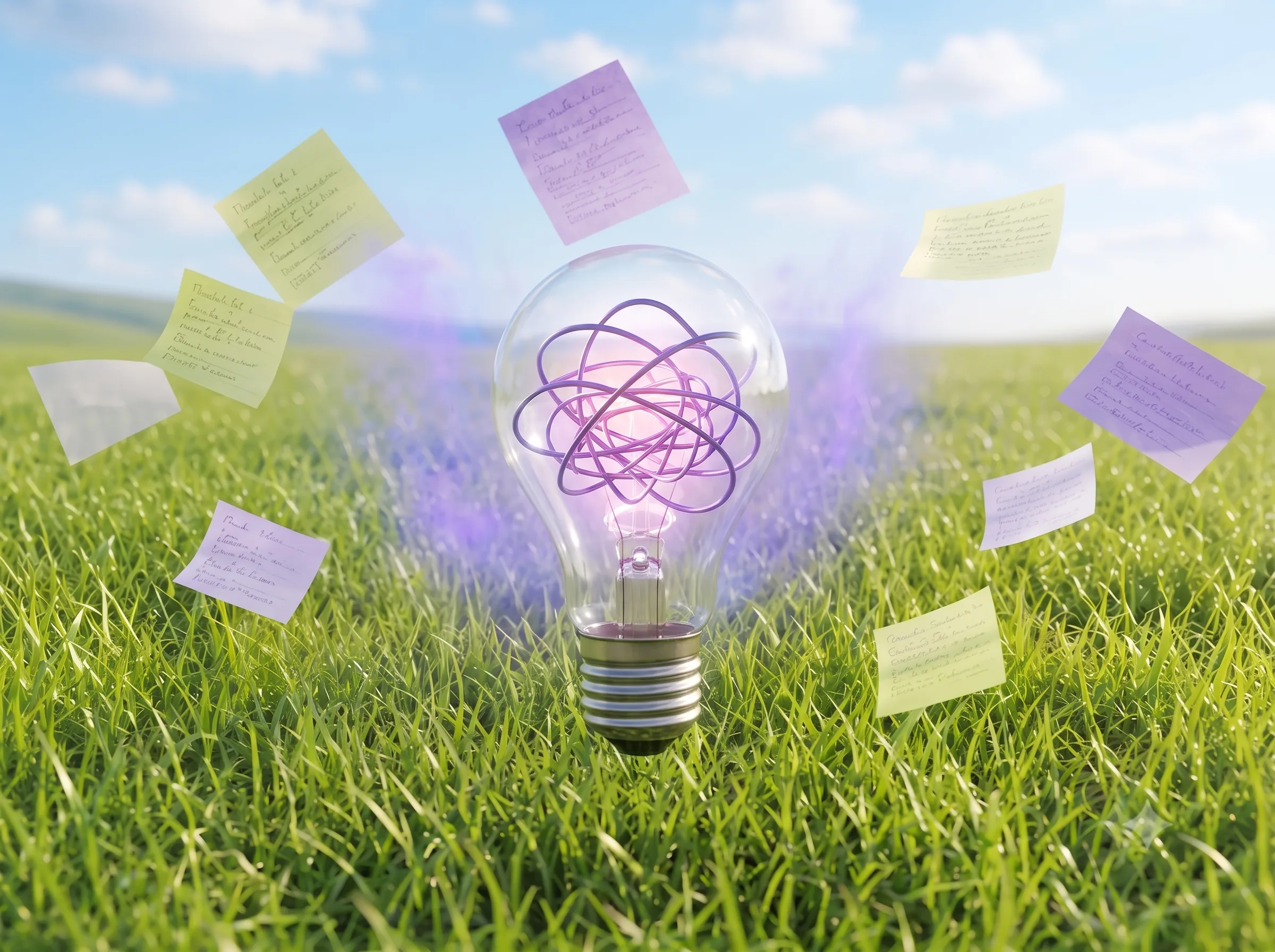

Your working memory has limited space. Every time you learn something new, follow complex instructions, or work through a hard problem, you fill that space with mental effort. Cognitive load theory explains why some learning feels effortless while other learning feels impossible, and it points to what you can actually change.
Where This Framework Comes From
Cognitive load is the mental demand placed on working memory when you understand new content or complete a task. Picture working memory as a small workbench: only a few pieces of information fit in active thought at once. The theory rests on a simple premise, that working memory has limited capacity.
The idea grew out of research on how people process new information. Learning stalls when too much demand hits working memory at the same time, and well-designed instruction keeps people in the zone where learning happens. That is why a 50-slide deck packed with dense text overwhelms you, while a clear step-by-step lesson sticks.
The Two Types of Cognitive Load
Cognitive load comes in two forms: intrinsic and extraneous. Both draw on the same limited working-memory space, and telling them apart changes how you structure what you study.
Intrinsic Load: Task Complexity and Prior Knowledge
Intrinsic load is the difficulty built into the information or task itself, shaped by its complexity and how its parts interact. The more elements that interact, the higher the intrinsic load.
Take learning a new recipe. Three steps and five ingredients keep intrinsic load low. A dish where the sauce depends on timing the meat, the garnish needs an herb infusion, and the sides all have to finish together runs high, because your working memory tracks several dependencies at once.
Prior knowledge lowers that load. A cook who already understands emulsification, searing, and timing feels less strain learning hollandaise than someone meeting those ideas for the first time. Familiar knowledge chunks information into single units and frees working-memory space for the new material. This is why experts make hard things look easy. A radiologist reading an X-ray does not process every pixel; years of exposure turned pattern recognition into something automatic, which drops the intrinsic load.
Extraneous Load: How Information Is Presented
Extraneous load comes from how information is presented, not from the material itself. A page crowded with text, a confusing layout, images fighting for attention, and extra instructions all eat more working memory than the same content shown plainly.
A busy or distracting classroom adds extraneous load by flooding sensory memory with irrelevant input. Hallway noise, clutter on the walls, a crowded screen: each one drains the working-memory capacity you need for learning, so you spend effort filtering noise instead of processing the lesson.
Long verbal instructions do the same. A teacher who says “Open the textbook, turn to page 42, find the diagram top right, ignore the caption, focus on the arrows” burns more working memory than “Look at this diagram” with a point of the finger. Extraneous load is the part you can control. You cannot change how complex a task is, but you can change how it reaches the learner.
What Happens When Cognitive Load Exceeds Capacity
When intrinsic and extraneous load combine and push past capacity, cognitive overload sets in and learning stalls. Working memory is full, so new information has nowhere to go.
Overload feels like confusion, frustration, or the sense that nothing will stick. This is not laziness or weak effort, it is a hard ceiling on human attention and memory, and no amount of willpower raises it. Once overloaded, people simplify the task, quit, or fall back on shallow memorization that fades within days. That is why cramming produces such weak retention: working memory floods, so the brain lays down fragile surface traces instead of durable understanding.
Strategies to Manage Cognitive Load While Learning
The aim is to keep intrinsic load productive while cutting extraneous load, so working memory stays fixed on the actual goal. A few evidence-backed moves get you there.
Break tasks into small steps and practice them one at a time. Driving means managing steering, acceleration, braking, mirror checks, and road rules all at once. A good curriculum isolates each skill first: you practice steering in an empty lot, then braking, and only combine them once each one runs on its own. Working memory handles one element until it becomes automatic, which clears room for the next.
Check for the prior knowledge a task needs before you add new material. A math teacher who confirms students know fractions before teaching ratios heads off overload. When the foundation is already automatic, working memory stays free for what is genuinely new.
Trim extraneous load by cutting steps and instructions, or chunking them. Rather than dumping ten instructions at once, give the first three, confirm they landed, then continue. Rather than a resource stuffed with decorative images and sidebars, show only what matters. Every bit of irrelevant demand you remove hands working memory back to the material.
Clear distractions and strip resources to the essentials. A quiet space, one focused screen, and a clean notebook cut the sensory noise competing for attention. Remove the competing demands and extraneous load drops fast.
How Fluxo Applies Cognitive Load Theory to Notes and Flashcards
A study tool can add cognitive load or take it away. Fluxo is built to cut extraneous load so what you study sticks.
Writing your own notes in Fluxo forces you to boil material down to the essentials. You are not wrestling with raw textbooks or sprawling articles; you work from notes you already filtered, which lowers extraneous load from the start. Writing also makes you think the material through, so encoding is stronger before a single flashcard appears.
Fluxo then generates flashcards from those notes and breaks the material into small pieces you practice one at a time. Instead of holding ten concepts in working memory at once, you answer one question, check it, and move on. That steady chunking builds automaticity and frees cognitive load. Quizzes and summaries come from the same notes, giving you several ways into the material without the extraneous load of building cards by hand.
Spaced-repetition scheduling brings material back when your recall is weakest. Because Fluxo tracks what you already hold, it times review to your current knowledge: you see the cards you are about to forget, not the ones you know cold or ones so far out they feel pointless. That keeps you clear of both over-review boredom and under-review overload.
Streaks, a companion mascot, and gamified sessions add engagement without pulling focus. They reinforce the goal you set rather than compete with it, so extraneous load stays low. Fluxo can also suggest new topics to explore when you are ready for them.
Tools That Use This Framework
Several study tools lean on cognitive load principles, each with its own strengths.
Fluxo (https://fluxo.today) lets you write your own notes and builds flashcards, quizzes, and summaries from them. Spaced repetition sequences review to your knowledge state, keeping load in check, and because everything starts from your notes, you control what enters working memory.
Anki is a powerful open-source flashcard system with deep scheduling and full customization. You get complete control over cards and timing, but the learning curve is steep and most decks need manual card-writing, which piles on extraneous load early.
RemNote merges note-taking and flashcards, so you can generate cards straight from your notes. It suits students who want notes and study material living in one connected workflow.
Mochi leans on clean design and markdown-based cards. Its spaced repetition is strong and it stays simpler than Anki, which makes it friendlier for beginners.
Quizlet is the most popular of the group, with pre-made sets, flashcards, and games. It favors easy entry and community sharing over the cognitive-load principles here, though its games do pull learners in.
Each tool trades off differently. Fluxo puts your own notes and AI generation first, which cuts the load of building cards. Anki hands advanced users maximum scheduling control. RemNote ties notes and cards together. Quizlet chases volume and social features. Pick based on how you learn and where your extraneous load actually bites.